Our Sale West is one of 150 areas around the country, awarded £1 million in 2015 by the National Lottery. We had 10 years to use the money to make a positive and lasting difference to the community and residents lives of the Sale West Estate.
we are now a registered CIO (Charity Number 117262)
We have a partnership board who continually consults with residents as to how the money should be spent.
We have 4 main aims which cover numerous projects:-
Environment and Community Spaces
Employment and Training
Health and Wellbeing
Youth
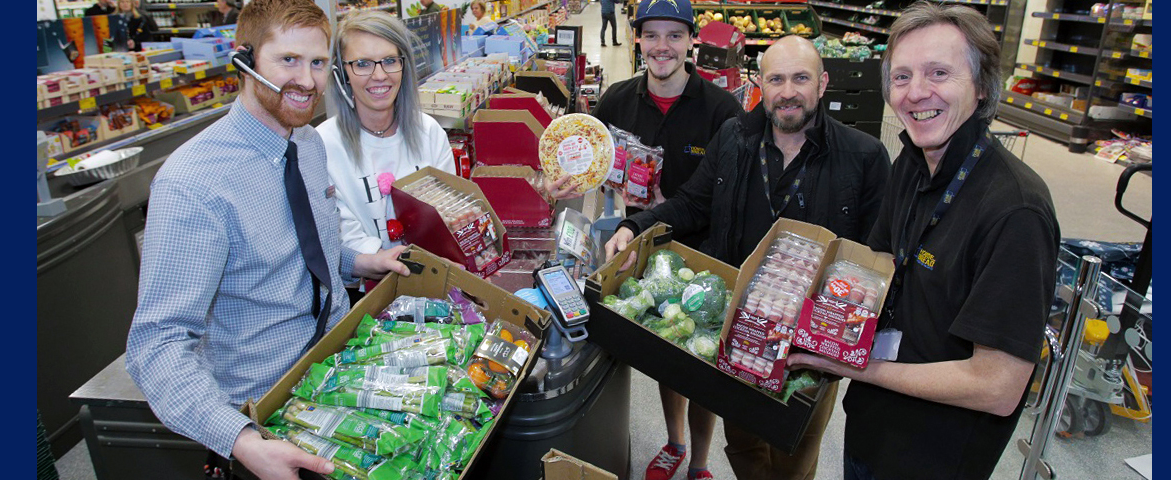
Our volunteers have been running a food share scheme for 3 years and pick up from various stores. It is free and open to all. This has helped feed residents who may be in poverty.
What we've received
Meals53,594
Non-food (tonnes)1.17
Money£650
Bury Community Hub
Bury, UK
We are Bury Seventh Day Adventist church, based at 32 Parkhill’s Road, Bury, BL9 9HS - Charity Number: 1045501.
As a small community church with a vision for providing a safe and warm place for vulnerable, lonely, struggling families to come and have some food, get a food parcel and have a conversation with someone.
In doing this we tackle loneliness, isolation and tough times for people who are struggling both financially and emotionally during these tough times.
We started out as a soup kitchen for rough sleepers a year ago, it has become apparent that there is a larger need for people struggling to make basic ends meet and who are socially isolated.
We hope to continue giving out a meal with a food parcel in our open-air car park, following Covid government guidelines
What we've received
Meals62,041
Non-food (tonnes)1.13
Money£400
Food Rescue Group, Manchester
Manchester, UK
The Food Rescue Group at Manchester mobilises an active and committed network of student volunteers and community partners from across the city. Led by students from local universities, the group turns climate concern into practical action by addressing food waste at a grassroots level.
Food waste is a major driver of climate change. Valuable resources such as land, water, and energy are consumed to produce food, yet large quantities are discarded and sent to landfill, where they generate methane, a greenhouse gas far more potent than carbon dioxide. By rescuing surplus food and redirecting it to people who need it, the group reduces environmental harm while supporting families and individuals across Manchester.
The initiative works in partnership with local producers, retailers, and food businesses to ensure surplus food is used rather than wasted. These partnerships reduce disposal costs for businesses while delivering measurable environmental benefits. In Manchester, operations are powered by students from the University of Manchester, Manchester Metropolitan University, the University of Salford, the University of Bolton, and the Royal Northern College of Music, alongside members of the Hindu community and other local groups. Together, they demonstrate how student-led action can create meaningful climate impact.
Pickup and distribution in Manchester are coordinated by Haojun Shuai and Ramanujam Nagarajan, who manage volunteer schedules, oversee collections, and ensure rescued food is delivered promptly and safely. Their leadership supports efficient operations while keeping the group’s work firmly rooted in student engagement and community values.
Food is collected and redistributed within 15 minutes of pickup, ensuring freshness and removing the need for storage facilities. All items are carefully inspected to meet food safety standards, and any unsuitable food is disposed of responsibly to minimise environmental impact. Coordination is managed through a dedicated WhatsApp group, providing real-time updates on collection times, locations, and quantities.
Through this work, the Food Rescue Group at Manchester diverts significant volumes of food from landfill, reduces greenhouse gas emissions, conserves valuable resources, and strengthens community connections. As the group continues to grow, it remains committed to showing how student-led climate action can drive real change, one meal, one volunteer, and one community at a time.
What we've received
Meals236,229
Non-food (tonnes)0.87